The way forward
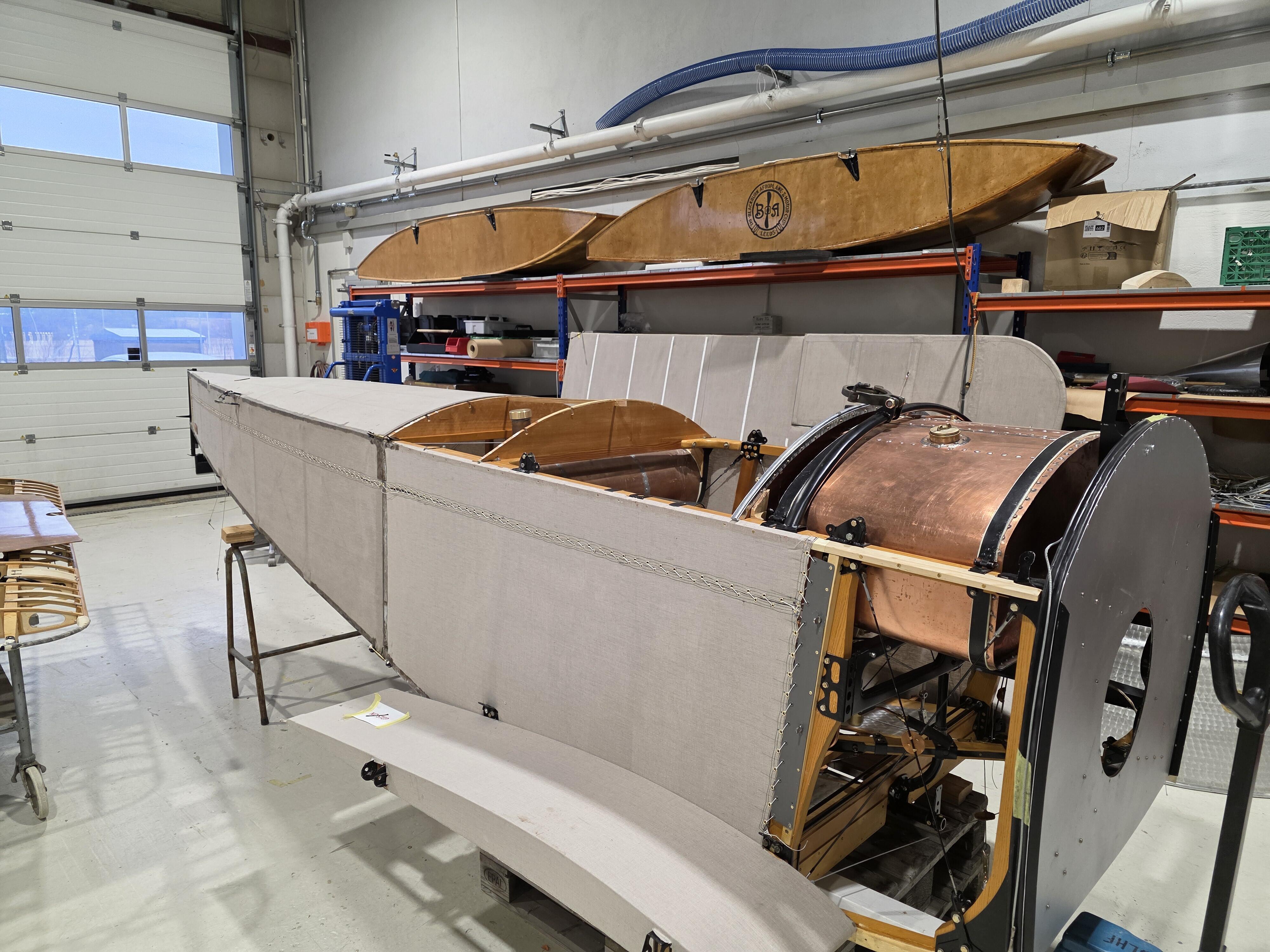
The fuselage:
Presentation concept
As work on the Sopwith Baby (SB) has progressed, increasing attention has been given to how the aircraft should be presented to the public. A great deal of craftsmanship and research lies behind this project, which is now nearing completion. It quickly became clear that it would not be sufficient to display the aircraft simply as a finished object. The construction methods, materials, and mechanical solutions are also an important part of its story and should be made visible to visitors.
Proposed display solution
The idea was partly inspired by the positive response to the Norseman display, where wings and sections of the fuselage are shown without covering. A similar approach was therefore considered for the Sopwith Baby. Its structure is visually striking, yet much of it cannot be seen once the aircraft is covered with fabric.
To make its construction accessible to the public, it was decided that the upper section of the right wing should remain uncovered. This will allow visitors to see the internal framework, including the struts, materials, and transfer of forces within the structure.
In the same spirit, the right side of the rear fuselage should remain open where access has already been created for inspection and potential repairs. Since the side is secured with lacing, it can also be opened when needed.
All together, this solution will give visitors a far better understanding of how the aircraft is built and how it functions than could ever be conveyed through drawings or display panels alone.
Engine:
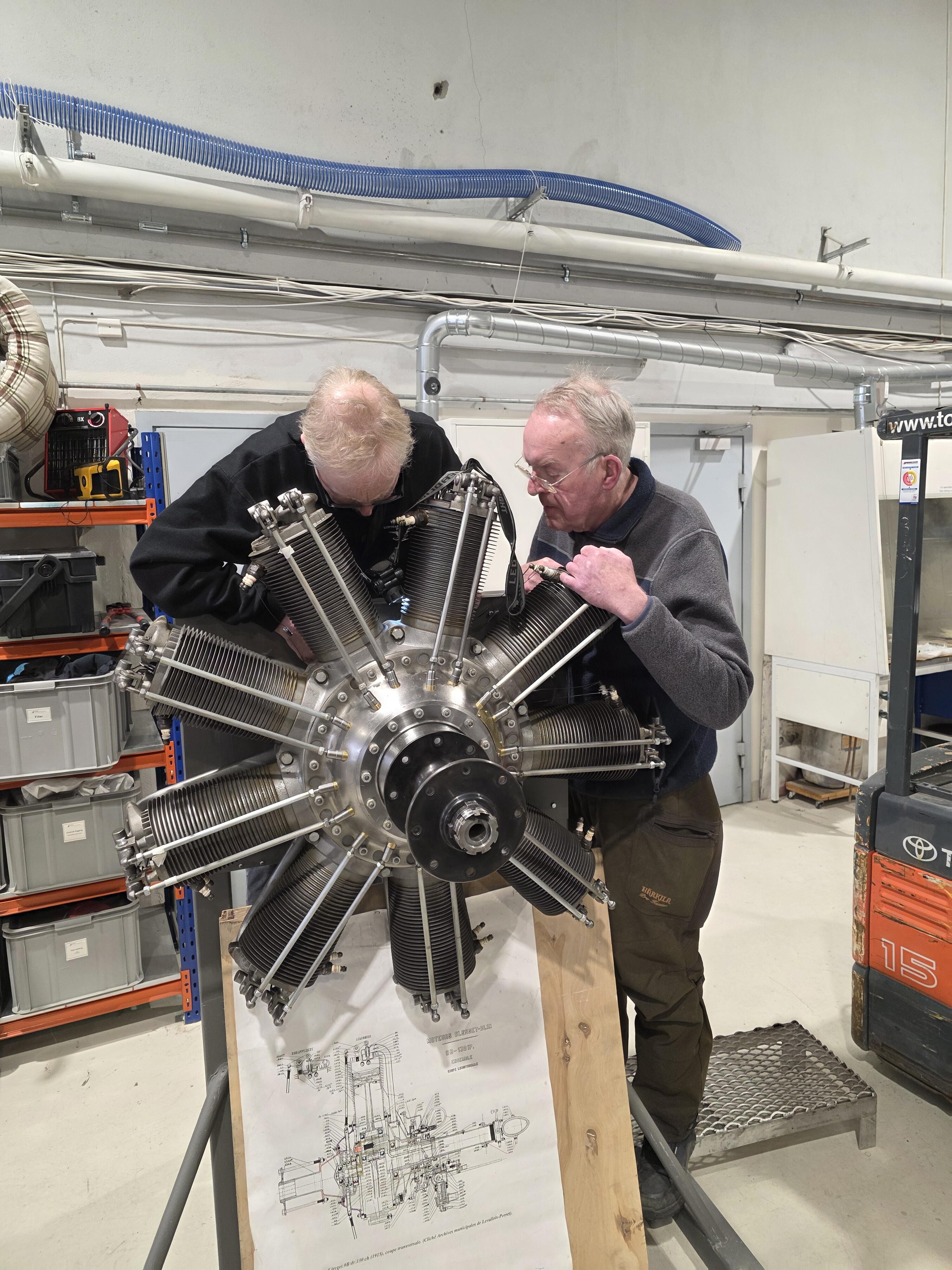
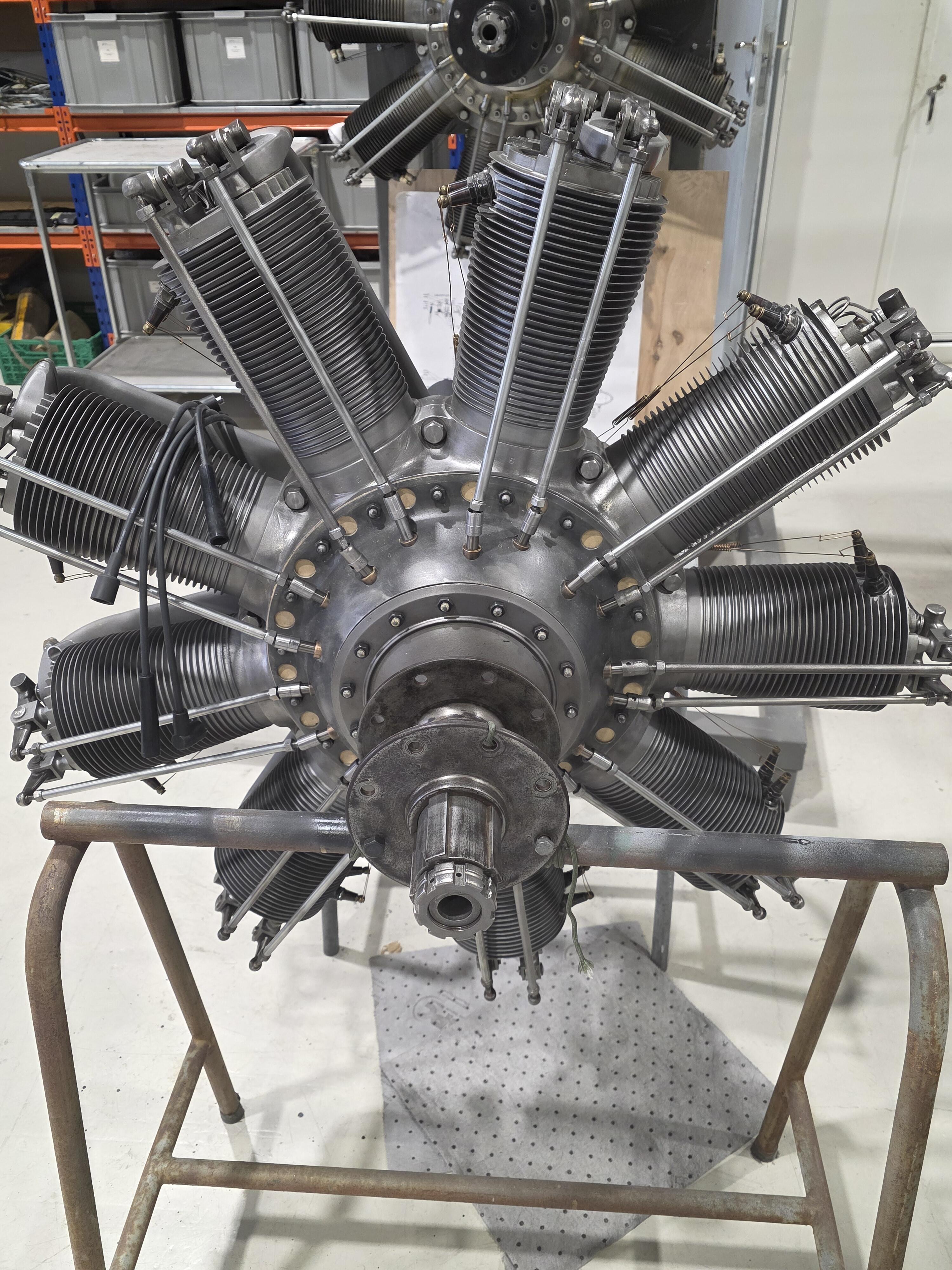
Engine parts discovered:
Along with the fuselage components came several boxes with engine parts. The collection was believed to contain enough parts to assemble two nine-cylinder Clerget rotary engines.
Both the fuselage and engine parts have been stored in Hangar 9, where they remained for an unknown length of time. Eventually, Anders raised the question of whether the Sopwith Baby could become the museum’s next project.
The idea appealed strongly to those with experience building model aircraft, while those more accustomed to working with more modern machines were less enthusiastic. Even so, the boxes were retrieved from Hangar 9—just in time, as the storage conditions had been poor and several engine parts had already developed rust stains.
Assessment and outcome
Once the parts had been sorted and checked against the drawings and manual, it quickly became clear that several essential components were missing. This ruled out both the possibility of returning the aircraft to flying condition and the idea of building a fully running engine.
However, the material was sufficient to create two engines for exhibition purposes: one engine to be installed in the aircraft, and one on separate display that visitors could examine more closely.
With some ingenuity, both could be assembled as outwardly complete engines with not complete internal crank mechanisms. The display engine would also allow visitors to touch the structure and turn the propeller and engine by hand.
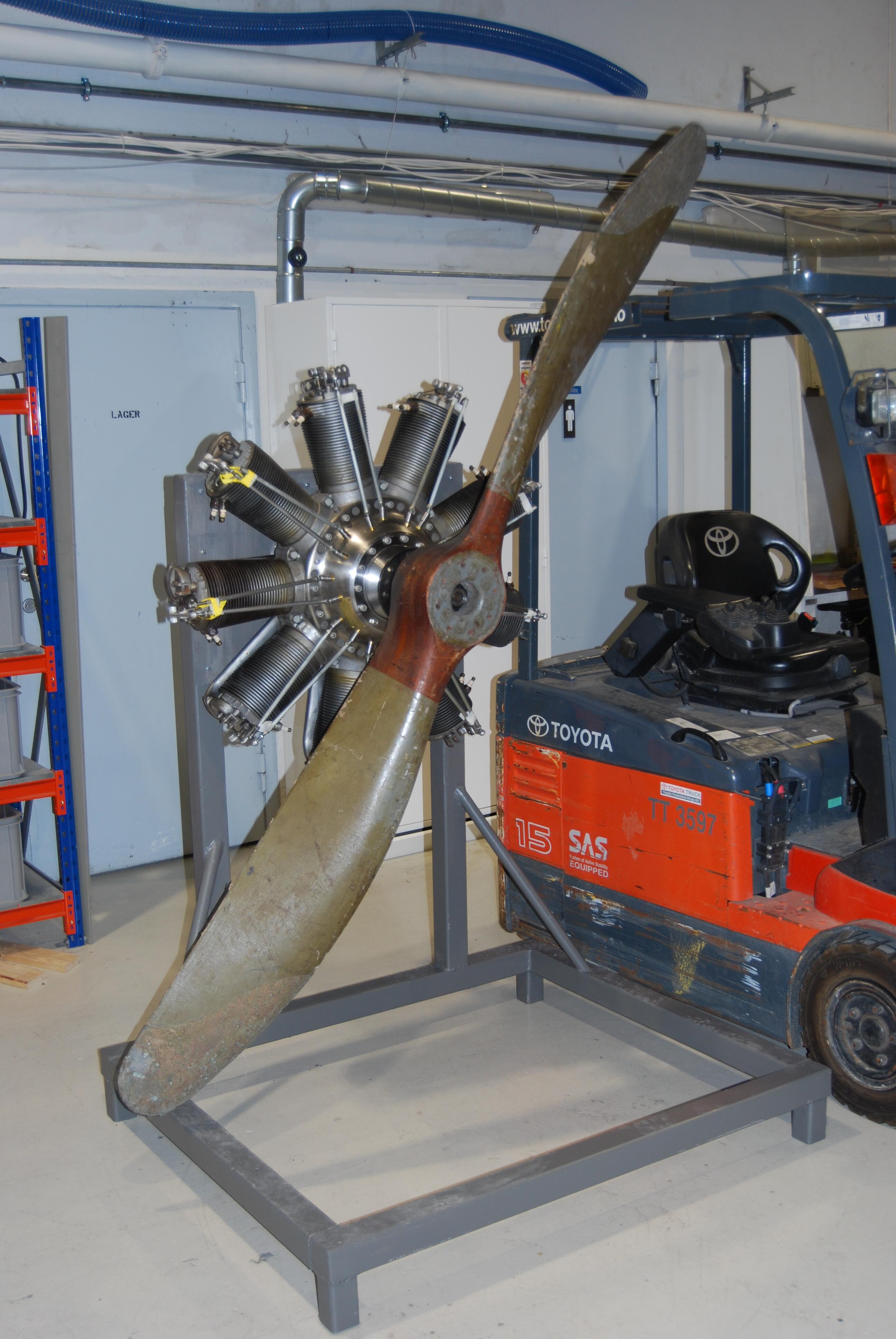
To the right is the display engine, to the left is the engine for the plane.
1: We have a propeller that was bought from England and is considered original judging by its markings. It lay in Horten, and is to be fitted to the engine that will go into the aircraft.
2: We received a propeller from Sola. It appears to have been used. It will be displayed as it is, only washed and preserved, with no new fabric or paint.
The propellers
Three propellers are included in the project, each with a distinct origin and intended use in the exhibition.
Top image: Propeller from Horten, origin England.
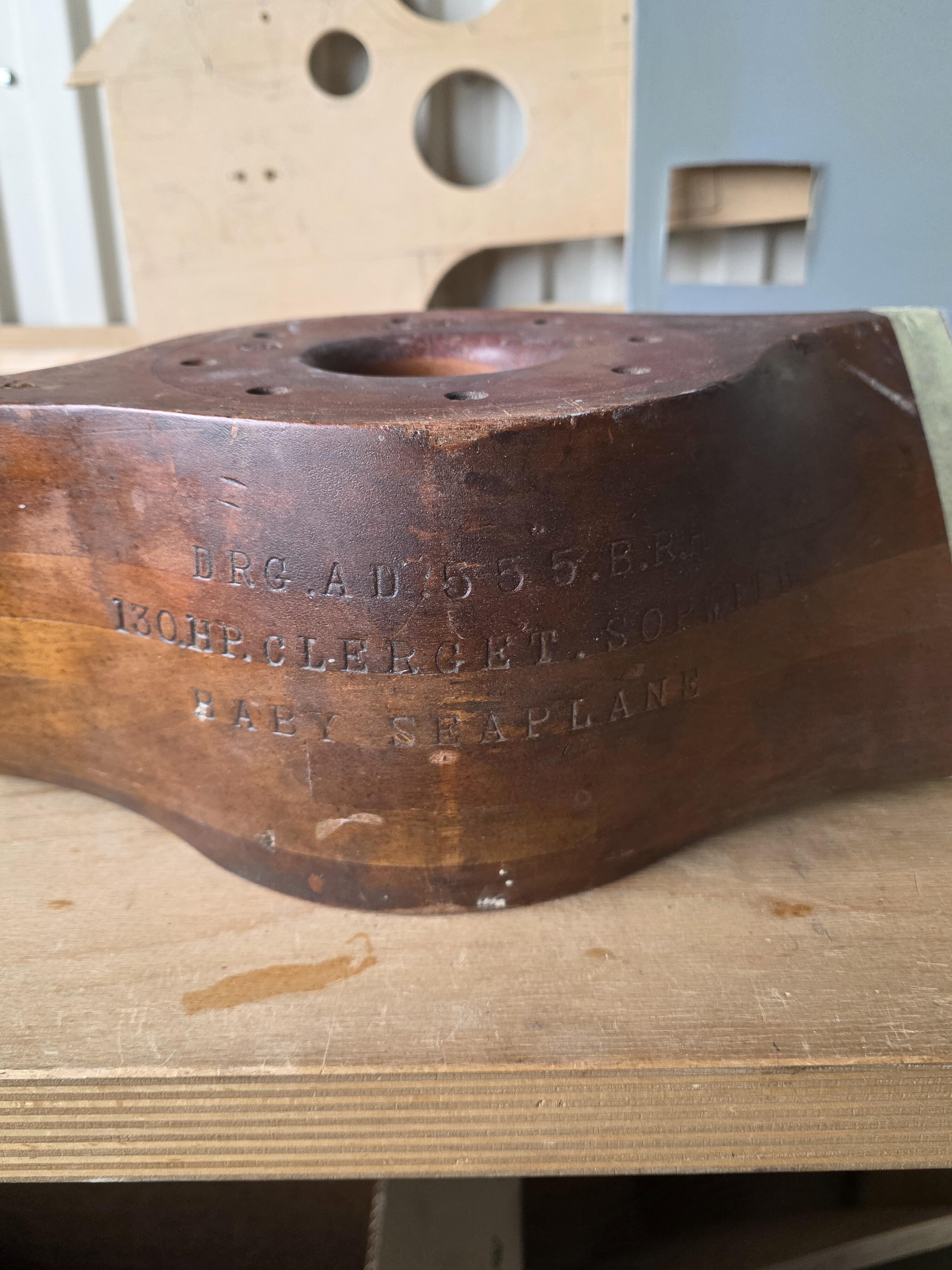
Middle image: Text on the propeller hub of the propeller from Horten.
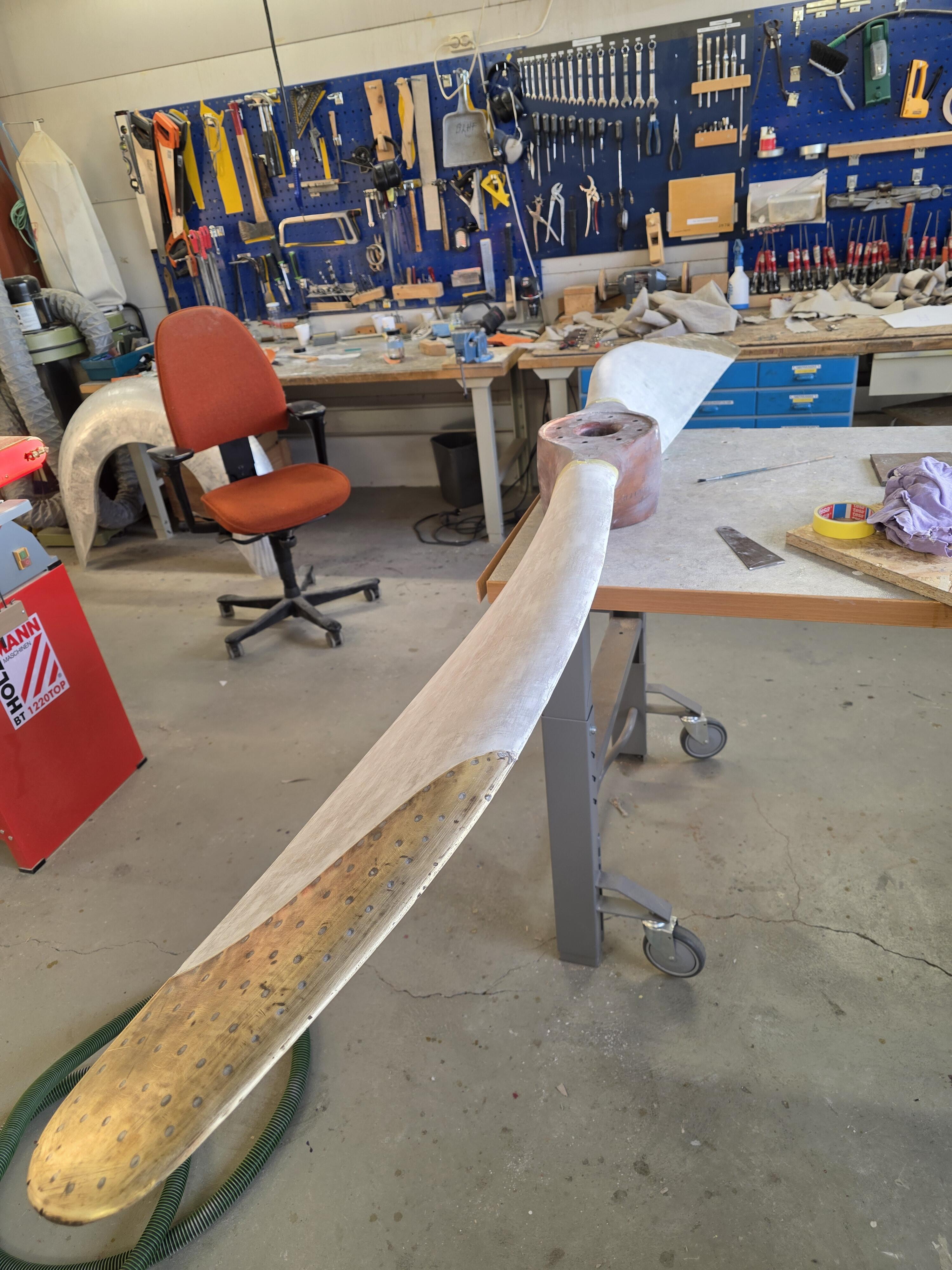
Bottom image: English propeller ready for painting
A third propeller will be ordered from a company in the Czech Republic, known for high-quality workmanship. This propeller will be fitted with the exhibition engine, allowing the two historic propellers to be preserved and protected from unnecessary wear.
Click on the pictures