More than a thousand screws
In 1917, when the original was built, no glue had been made that had the properties that would allow the floats to be glued together. Instead, brass screws were used because they are rustproof. In all, 2500 original screws were ordered from England. When we were finished, only a few were left over.
In 1917 when the original was built, there was no glue made that had the properties that allowed the floats to be glued together. A total of 2,500 original brass screws were ordered from England. When the floats were finished, there were only a few screws left.
Click on the pictures
© Arvid Martinussen (AM)
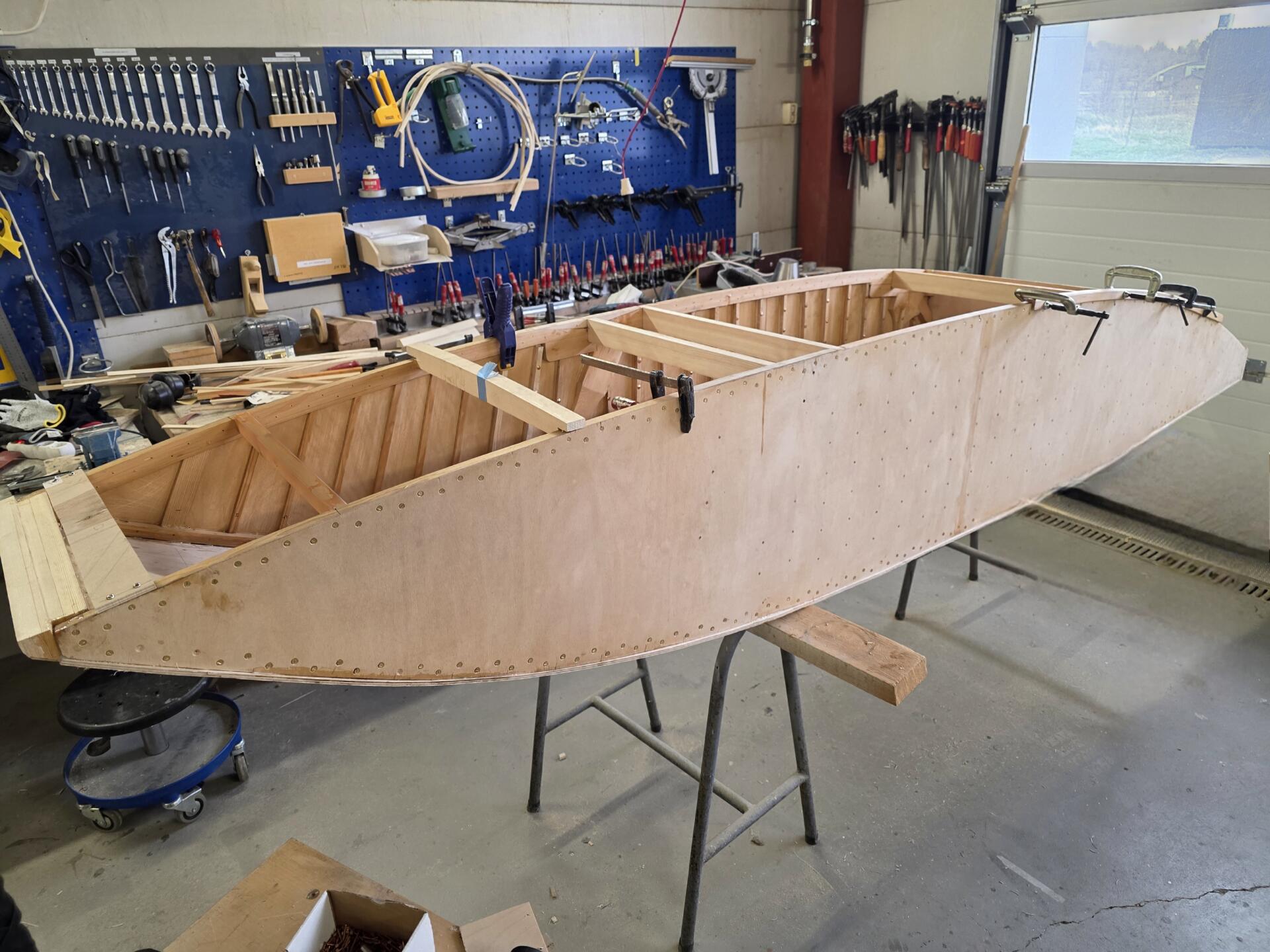
20.05: No glue has been used to hold the sides of the floats together. An attempt with a combination of glue and screws resulted in the glue drying before the screws were in place. Ribs and reinforcements are still being fitted.
© AM
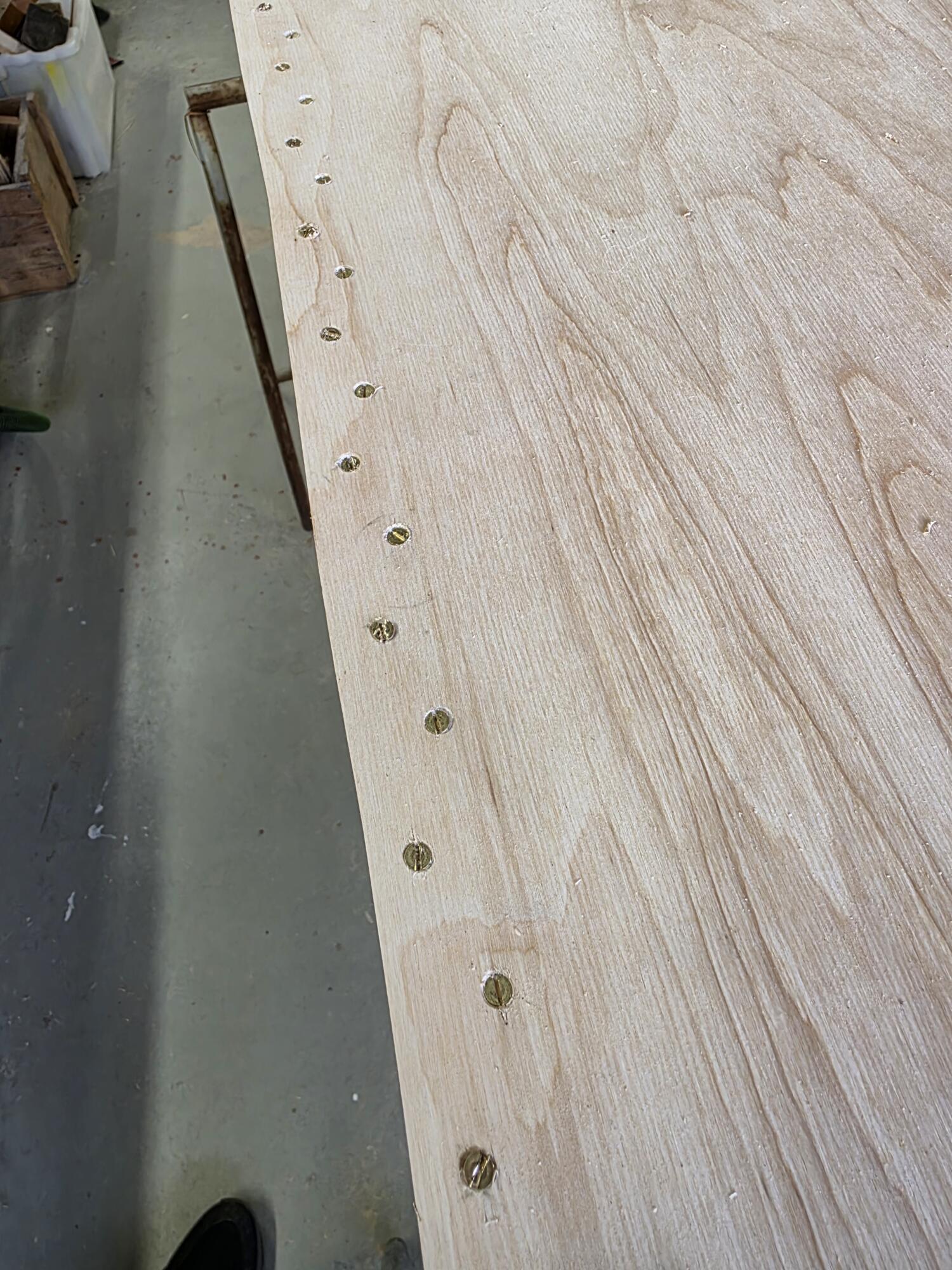
20.05: On one float there are 8 lengths that are to be fastened to each other.
© AM
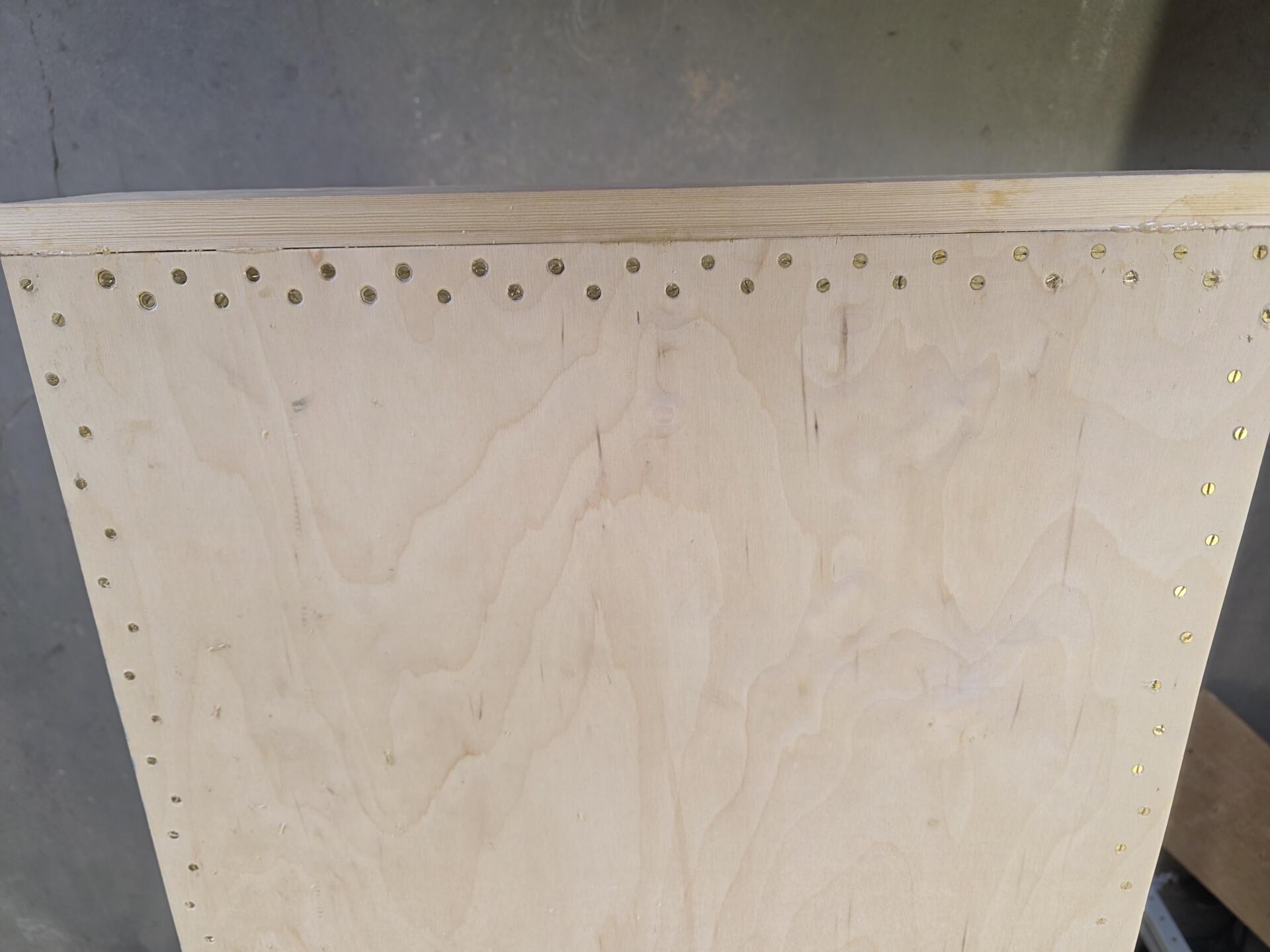
20.05: The ends were first glued, then screwed.
© AM
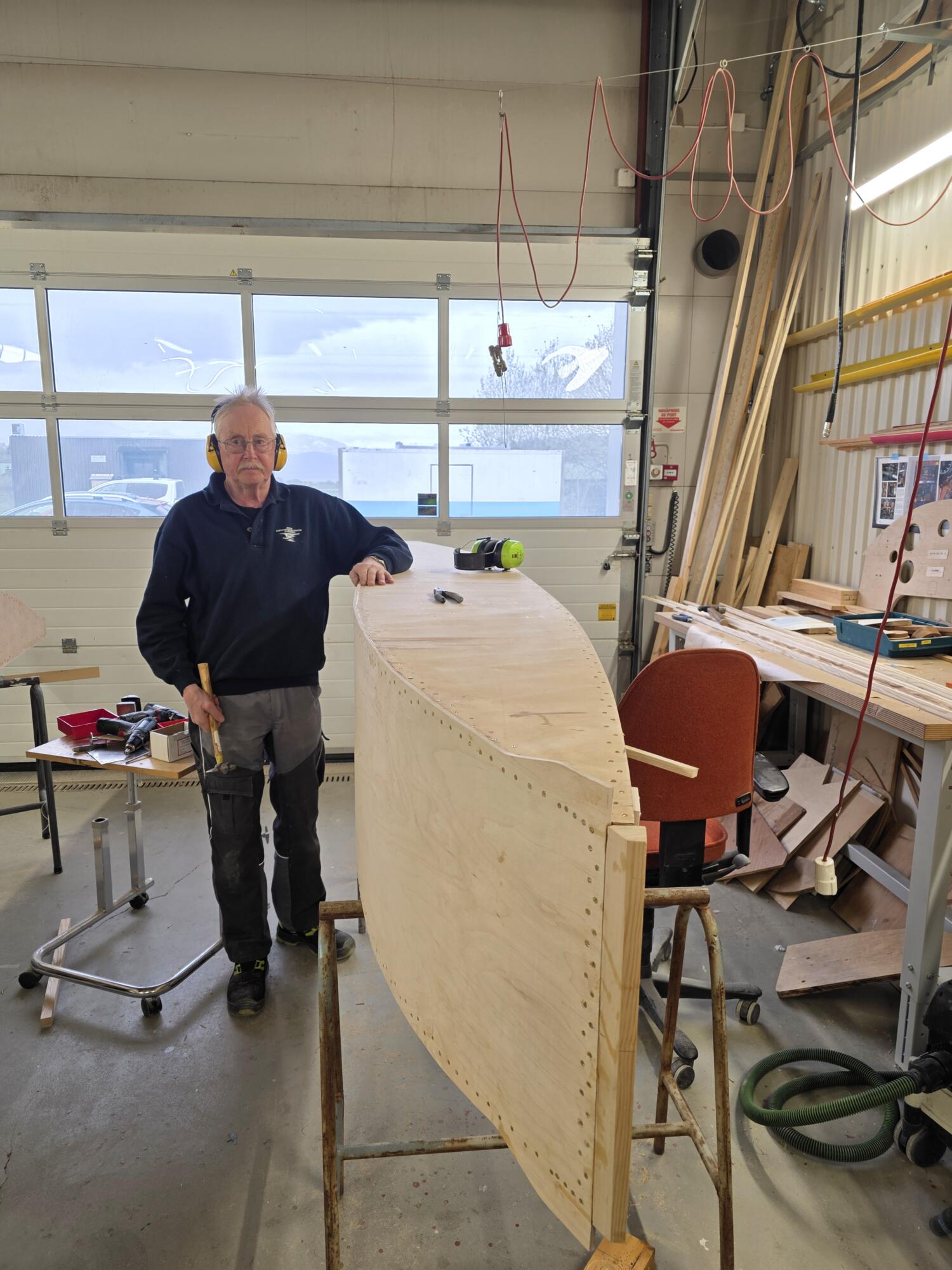
26.05 Three of the sides of one float are almost finished being screwed and riveted. Bård and Per get the honour of putting the finishing touch to the work.
© AM
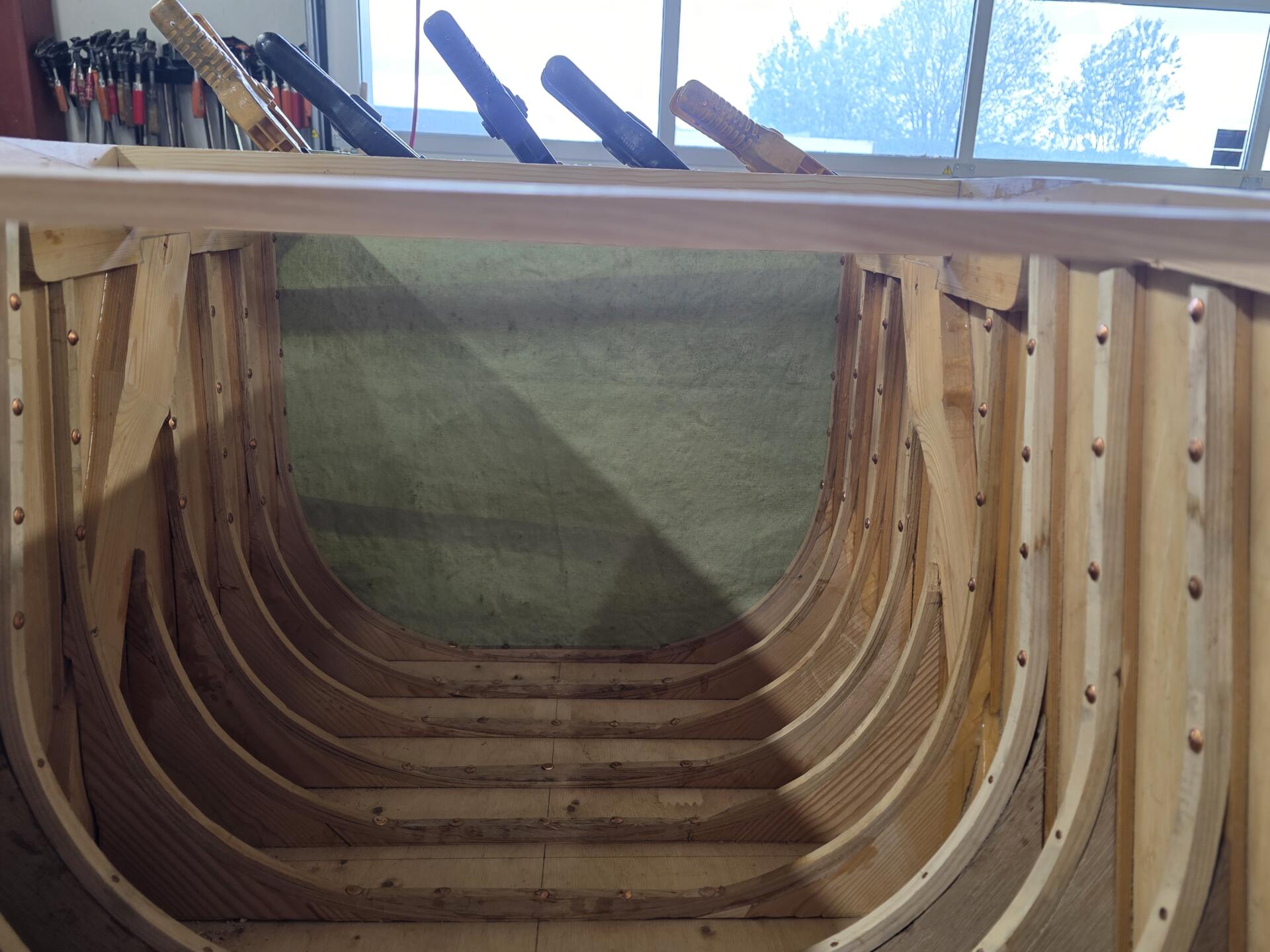
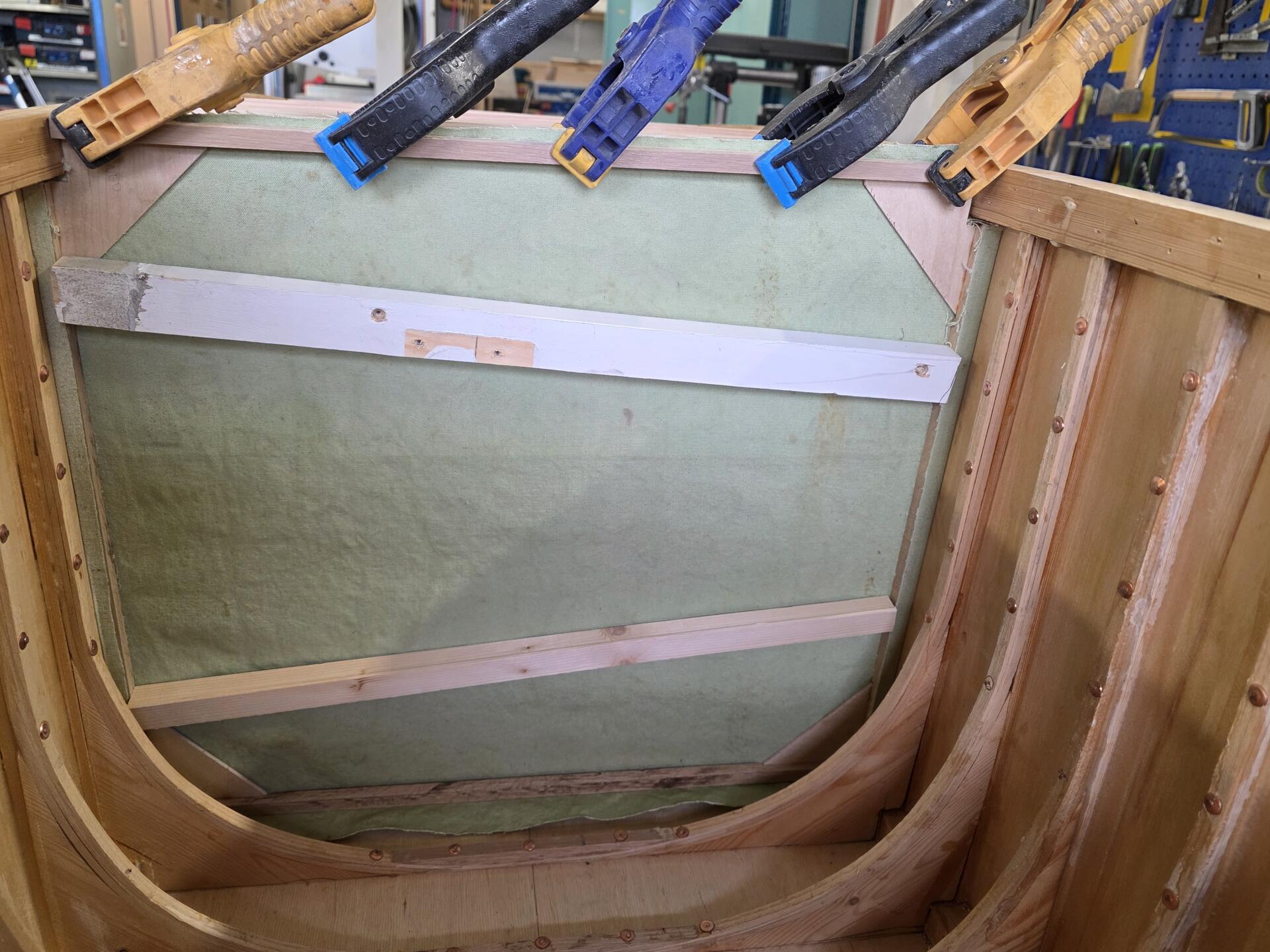
06.06 On the inside the floats are divided in two by a watertight bulkhead made of a special fabric. The picture shows the fabric stretched to the float sides with clamping strips. The white strips are removed when the glue has dried.
© AM
06.06 To protect the floats on the inside against moisture, the materials are to be given a coat of thin casting epoxy. Using epoxy instead of oil varnish is a departure from "the book", but gives the best strength and protection.