
From the “Gammelflyplassen” (the Old Airfield)

In for landing from the west at the plank airfield in Bodø. View towards the town and the Saltenfjord.

The city and Hjertøyene top right.
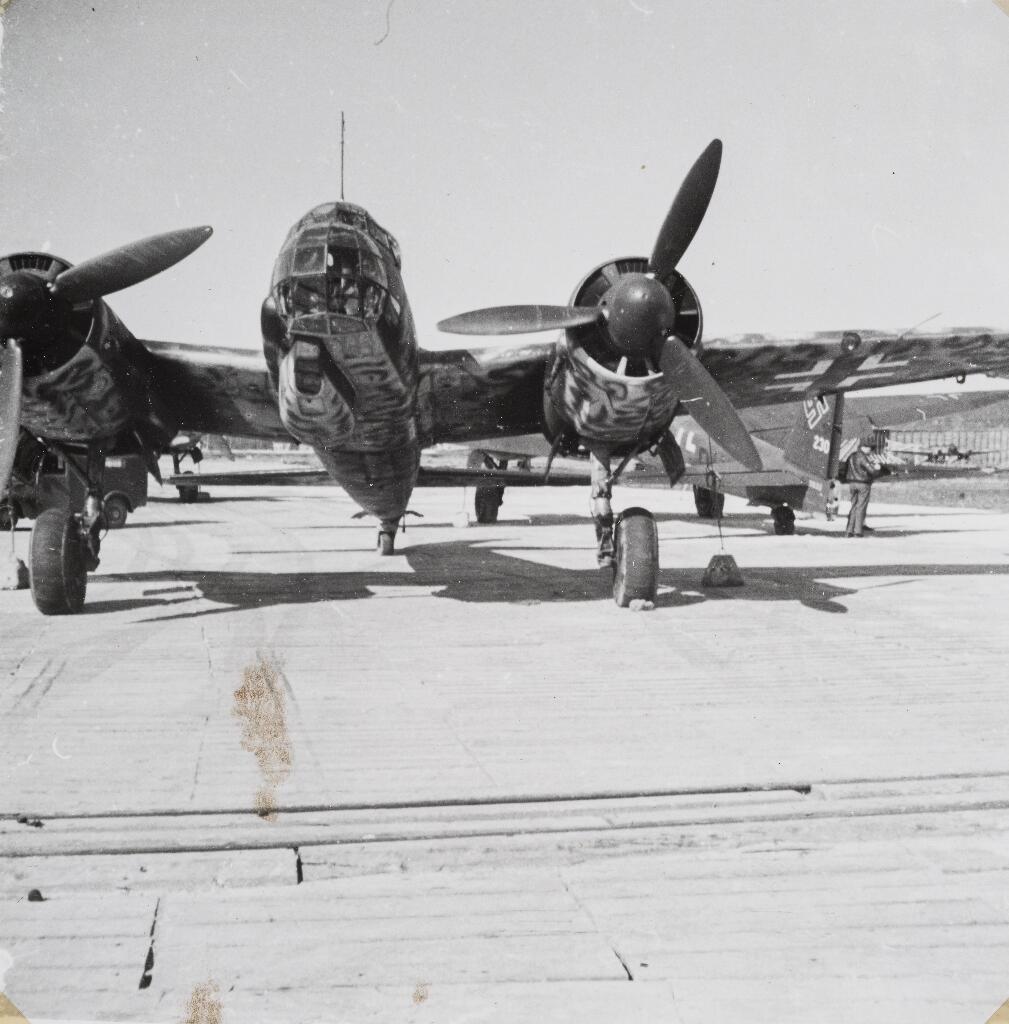
There were several Ju 88s at the airfield when the Allied arrived. The planes have been used for e.g. surveillance of the coast and the sea areas beyond. They were also used to attack Allied shipping. In their snouts they have something like an antennae. It shows that the planes were equipped with radar, which was not quite common at the time.
It may look as if the planes are equipped with a radial engine. They are not. They have Jumo 211 engines, V 12 with hanging cylinders. The round cowlings come from the radiator being round and located around the front of the engine.
At the workshop of the Norwegian Aviation Museum in Olav V gt. 120 we are restoring a Ju 88 and a Jumo 211 engine.

Remnants of the camouflage net still hang on this Ju 88.


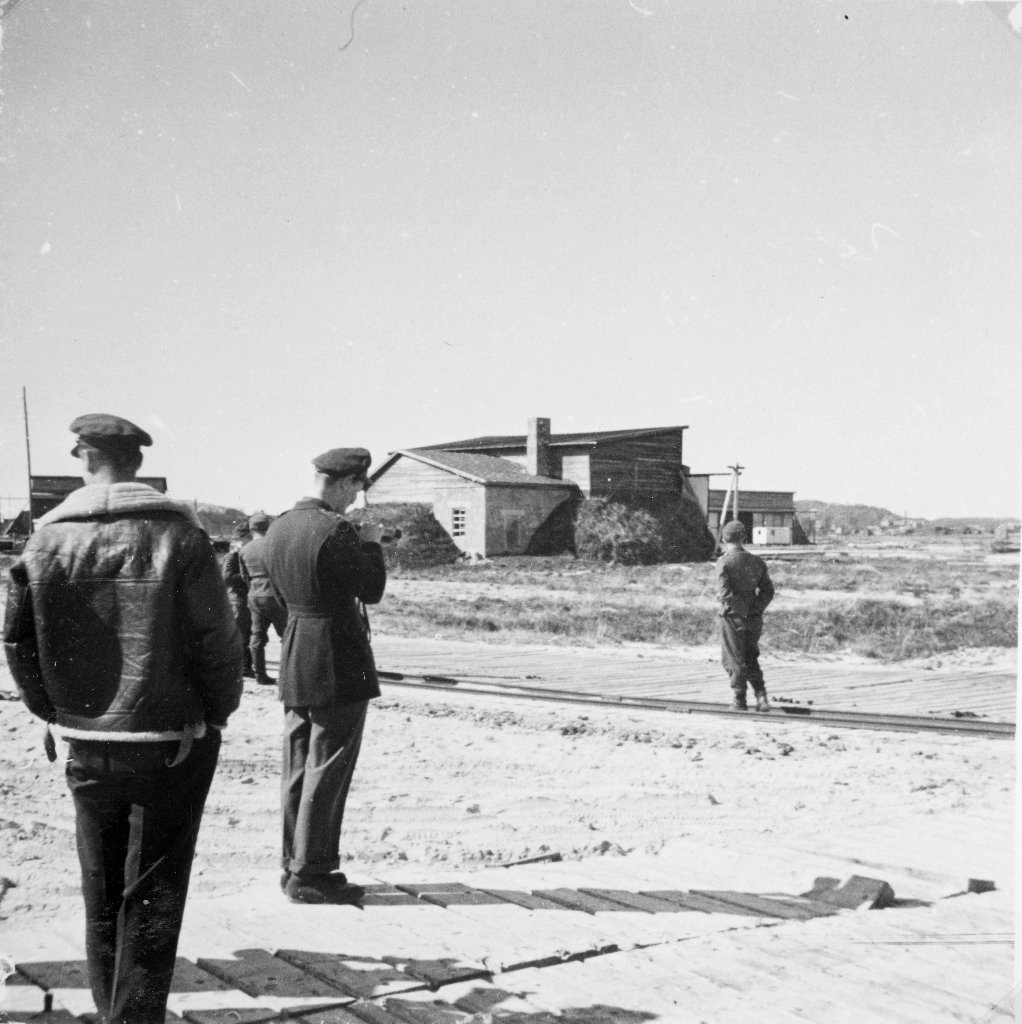
Earth mounds up the walls to protect against pressure from explosions and splinters. The Germans were prepared to be attacked. To the right a German soldier.

A Ju 88 in a splinter shelter. Here it is clearly shown how the planks are laid down. Far behind and to the left of the shelter, the hangar that stood at Stormyra can be seen, a roughly location is where the Shell gas station is today.
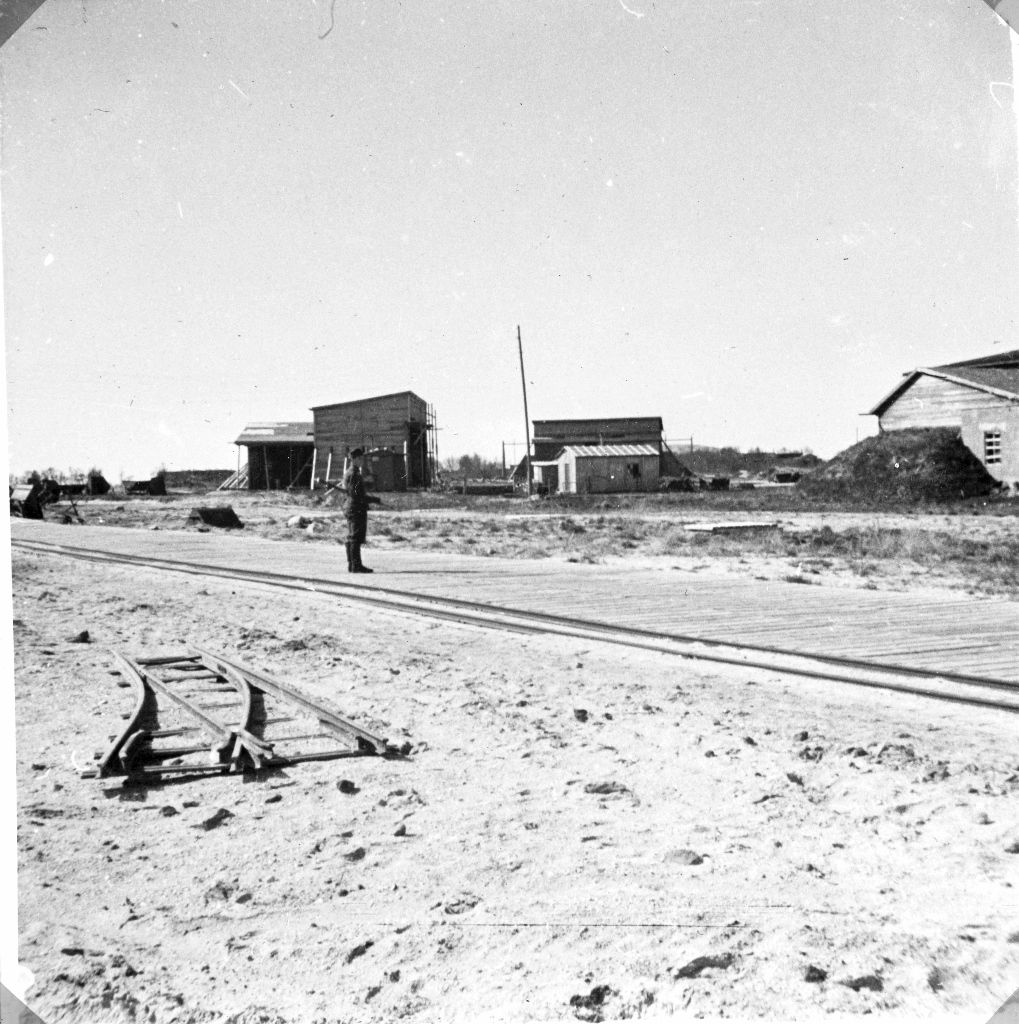
There were rails laid out in several places on which heavier things could be transported. The guard soldier may look like a German out from the hat and boots. It was not unusual that the Germans to continued guarding important infrastructure the first few days after the capitulation, until Norwegian or allied soldiers could take over.
Question: Were the Germans still at the airfield when you arrived?
Alexander Dobrowen: The Germans were at the airfield and had, strictly speaking, still been in charge there. The sport was to walk up to a German and ask to have his Luger pistol. Many Americans succeeded in this.

A relaxed American and a more uptight guy in an English battle uniform in conversation. The person in battle uniform may be senior doctor Anton Gisle Johnson who was the head of Milorg in the district.


This crashed Me 109 was off the runway.
